Browser
Tools- Category Tools
- Size 11.6 MB
- Requirements Android 0 and up
- Downloads 460,000,000+
- Package Name com.internet.tvbrowser
- Content Rating Everyone
About Browser Feature
Browser is a fundamental mobile application that serves as a gateway to the internet, enabling users to access websites, search for information, and interact with online content. Modern browsers have evolved beyond simple navigation tools, integrating advanced features for speed, security, and a personalized web experience. They are essential for everyday digital life, transforming smartphones into powerful portals for knowledge, communication, and entertainment.
Chapter 1: Function
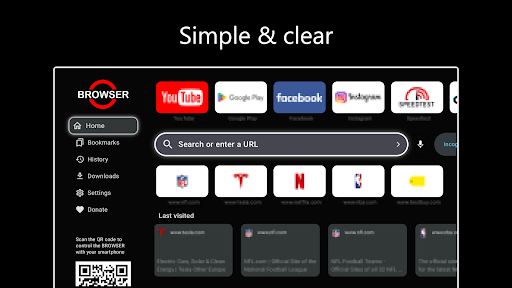
The core function of a browser is to retrieve, present, and traverse information resources on the World Wide Web. This process begins with entering a web address or search query. The browser then fetches data from web servers, interprets HTML, CSS, and JavaScript code, and renders the final webpage for the user. Key functionalities include tabbed browsing, which allows multiple web pages to be open simultaneously, and bookmarking for saving favorite sites. The refresh function reloads the current page, while the forward and back buttons facilitate navigation through browsing history. Furthermore, browsers manage downloads, store cookies for site preferences, and provide a private or incognito mode for browsing without saving local data. These fundamental operations work in concert to deliver a seamless and interactive web experience directly to the user's device.
Chapter 2: Value
The primary value of a modern browser lies in its ability to provide a fast, secure, and customizable window to the internet. A key advantage is speed; efficient browsers with optimized rendering engines load complex web pages almost instantly, saving users valuable time. Security is another critical value proposition. Browsers protect users by blocking pop-up ads, warning about deceptive or malicious websites, and offering private browsing modes that do not store history or cookies. They also support secure connections via HTTPS and allow for extensive customization through extensions and add-ons, enabling users to tailor their browsing experience with ad blockers, password managers, and productivity tools. Synchronization across devices is a significant benefit, allowing bookmarks, open tabs, and history to be seamlessly shared between a user's phone, tablet, and computer. This creates a continuous and personalized web experience. Ultimately, a robust browser empowers users by providing unrestricted access to global information, educational resources, and digital services, making it an indispensable tool for both personal and professional use.
Chapter 3: Scenarios
Browser apps are universally used across a wide spectrum of user groups and daily situations. Students represent a primary audience, relying on browsers for academic research, accessing online libraries, and using educational platforms for learning and assignments. Professionals use browsers extensively for work-related tasks such as checking emails, managing cloud-based projects, conducting market research, and participating in video conferences via web applications. For everyday users, the browser is a tool for staying informed by reading news, checking social media updates, and browsing entertainment content like videos and music. It is also crucial for practical daily activities, including online shopping, banking, booking travel tickets, and following recipe guides while cooking. In scenarios with limited connectivity, browsers with data-saving modes are invaluable for users needing to conserve their mobile data plans. From the casual user seeking a quick answer to a query to the power user managing complex web workflows, the browser serves as an essential utility for navigating the digital world.