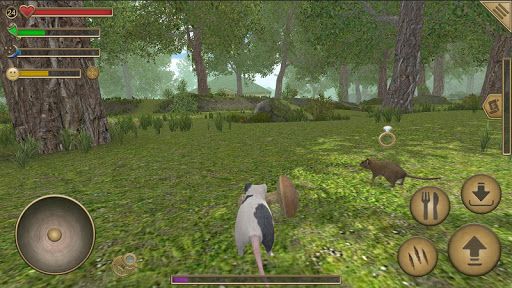
Mouse Simulator
Simulation- Category Simulation
- Size 64.01 Mb
- Requirements Android 4.1 and up
- Downloads 480,000,000+
- Package Name com.avelog.mouse
- Content Rating 3
About Mouse Simulator Feature
Mouse Simulator is a software application that replicates the functionality of a physical computer mouse within a digital environment. It allows users to control the cursor, click, drag, and perform other mouse actions using alternative input methods, most commonly the keyboard. This tool is designed for scenarios where a physical mouse is unavailable, malfunctioning, or when a user requires a different mode of interaction for specific tasks. It serves as a versatile utility, bridging the gap between hardware limitations and software requirements by providing full cursor control through programmable keystrokes and automated sequences.
Chapter 1: Function
Mouse Simulator's core function is to emulate all standard mouse operations without the need for a physical device. It translates keyboard inputs into precise cursor movements on the screen. Users can typically assign specific keys to control the cursor's up, down, left, and right movements, adjusting the speed and sensitivity to their preference. The software also enables key-based clicking for left, right, and middle mouse buttons, including single, double, and click-and-drag actions. Advanced features often include the ability to record and playback a series of mouse movements and clicks, creating macros for repetitive tasks. Some simulators offer additional functionalities like setting custom cursor paths, automating clicks at defined intervals, or toggling the cursor control on and off. This transforms the keyboard into a fully functional pointing device, ensuring continuous computer operation.
Chapter 2: Value
The primary value of Mouse Simulator lies in its role as a critical accessibility and productivity tool. For users with a physical disability or repetitive strain injury that makes using a mouse difficult or painful, it provides an essential alternative, enabling them to navigate their computer effectively and maintain productivity. Its value extends to IT professionals and system administrators who can use it for remote troubleshooting on systems where the mouse driver has failed, or to run automated scripts for software testing and quality assurance. Furthermore, it offers significant advantages in specific professional scenarios. For instance, graphic designers or video editors can use recorded macros to perform precise, repetitive adjustments without manual repetition, enhancing accuracy and saving time. In gaming, it can be configured to execute complex in-game actions with a single keypress, although its use must comply with the game's terms of service. The app also proves invaluable as an emergency backup; if a physical mouse breaks during an important presentation or work session, the simulator ensures the user can continue uninterrupted. By providing a software-based solution to a hardware-dependent task, Mouse Simulator enhances system reliability, promotes digital inclusion, and optimizes workflow efficiency across various user groups.
Chapter 3: Scenarios
Mouse Simulator primarily targets several key user groups. The first is individuals with temporary or permanent physical limitations who find using a standard mouse challenging; for them, the app is an accessibility aid that facilitates everyday computer use for work, communication, and entertainment. A second major group consists of power users and IT support staff. They utilize the simulator for technical support, especially in headless server environments or when configuring computers without a mouse, and for automating repetitive software tasks like data entry or bulk file renaming. Gamers form another user segment, employing the tool to create custom key bindings for games that benefit from precise mouse macro sequences, though this is application-specific. Finally, it is highly useful for general users in emergency situations, such as when a mouse battery dies, a wireless dongle is lost, or a driver malfunctions. In these everyday cases, the simulator acts as a reliable stopgap, allowing the user to finish urgent work, install new drivers, or order a replacement mouse without needing to borrow hardware.